Read Online How the Brain Lost Its Mind: Sex, Hysteria, and the Riddle of Mental Illness
[read ebook] How the Brain Lost Its Mind: Sex, Hysteria, and the Riddle of Mental Illness (PDF) Ebook
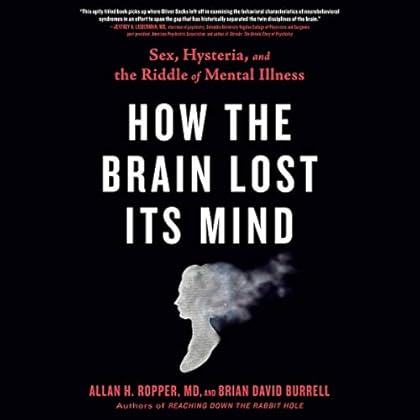
Description for How the Brain Lost Its Mind: Sex, Hysteria, and the Riddle of Mental Illness
A noted neurologist challenges the widespread misunderstanding of brain disease and mental illness.How the Brain Lost Its Mind tells the rich and compelling story of two confounding ailments, syphilis and hysteria, and the extraordinary efforts to confront their effects on mental life. How does the mind work? Where does madness lie, in the brain or in the mind? How should it be treated?Throughout the 19th century, syphilis - a disease of mad poets, musicians, and artists - swept through the highest and lowest rungs of European society like a plague. Known as "the Great Imitator", it could produce almost any form of mental or physical illness, and it would bring down a host of famous and infamous characters - among them Guy de Maupassant, Vincent van Gogh, the Marquis de Sade, Friedrich Nietzsche, and Al Capone. It was the first truly psychiatric disease and it filled asylums to overflowing. At the same time, an outbreak of bizarre behaviors resembling epilepsy, but with no identifiable source in the body, strained the diagnostic skills of the great neurologists. It was referred to as hysteria. For more than a century, neurosyphilis stood out as the archetype of a brain-based mental illness, fully understood but largely forgotten, and today far from gone. Hysteria, under many different names, remains unexplained and epidemic. These two conditions stand at opposite poles of the current debate over the role of the brain in mental illness. Hysteria led Freud to insert sex into psychology. Neurosyphilis led to the proliferation of mental institutions. The problem of managing the inmates led to the abuse of lobotomy and electroshock therapy, and ultimately the overuse of psychotropic drugs.Today, we know that syphilitic madness was a destructive disease of the brain while hysteria and, more broadly, many varieties of mental illness reside solely in the mind. Or do they? Afflictions once written off as "hysterical" continue to elude explanation. Addiction, alcoholism, autism, ADHD, Tourette syndrome, depression, and sociopathy, though regarded as brain-based, have not been proven to be so. In this audio, the authors raise a host of philosophical and practical questions. What is the difference between a sick mind and a sick brain? If we understood everything about the brain, would we understand ourselves? By delving into an overlooked history, this book shows how neuroscience and brain scans alone cannot account for a robust mental life, or a deeply disturbed one.
Books are everywhere. Libraries big and small and bookstores are splattered all over college campuses and larger cities. They are all filled with one of the most important things of all time—books. Those who read books appreciate the multiple places to find books. Those who aren’t fans of books, don’t understand what could make readers want to obsess over books. There is a reason for their obsession, though. You hear it all the time: read every day.Reading is important because it develops our thoughts, gives us endless knowledge and lessons to read while keeping our minds active. Reading books to help us learn and understand and makes us smarter, not to mention the knowledge, vocabulary and thinking skills we develop.In the world today where information are abundant, reading books is one of the best ways to be informed. Though reading might seem like simple fun, it can be helping your body and mind without you even realising what is happening. What makes reading so important? It can be for these reasons and not just knowledge.For those who don’t enjoy it, you might change your mind after hearing about the benefits. Can something so easy and fun be so helpful in your life? Of course, it can! Reading can be a great benefit to you in many different ways—such as sharpening your mind, imagination, and writing skills. With so many advantages, it should be an everyday occurrence to read at least a little something.Books can hold and keep all kinds of information, stories, thoughts and feelings unlike anything else in this world. Can words, paragraphs, and fictional worlds be all that great for you and your health? It definitely can, and it is a timeless form of entertainment and information
Step-By Step To Download How the Brain Lost Its Mind: Sex, Hysteria, and the Riddle of Mental Illness
- Click The Button "DOWNLOAD" Or "READ ONLINE"
- Sign UP registration to access & UNLIMITED BOOKS
- DOWNLOAD as many books as you like (personal use)
- CANCEL the membership at ANY TIME if not satisfied
- Join Over 80.000 & Happy Readers.
OR

No comments :
Post a Comment